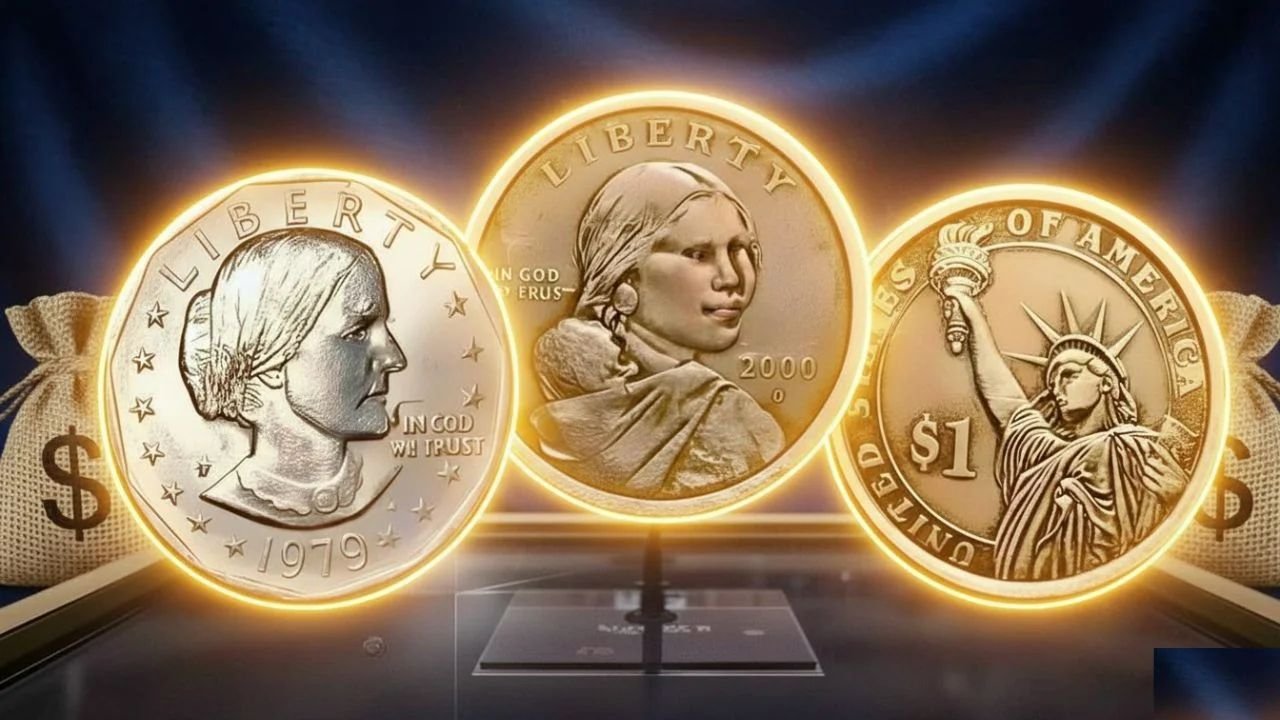
Between 1999 and 2008, the U.S. Mint transformed everyday quarters into miniature works of art, releasing special designs for each state. These coins captured the imagination of millions of Americans, turning ordinary pocket change into a modern collecting phenomenon. While most state quarters remain worth only face value, certain rare errors and anomalies have skyrocketed in value, making 2026 an exciting time for collectors and casual finders alike.
The Famous “Spitting Horse” Delaware Quarter
The 1999 Delaware quarter was the first release in the state series, featuring Caesar Rodney on horseback. A notable error known as the “Spitting Horse” occurs when a die crack makes it appear as though the horse is spitting. This unintentional feature fascinates collectors and can elevate the coin’s value substantially. Depending on condition and clarity, a Spitting Horse quarter can range from $50 to $500—far beyond its nominal 25-cent face value.
Wisconsin Quarters with an Extra Leaf
The 2004 Wisconsin quarter is perhaps the most famous modern error coin. The standard design depicts a cow, a wheel of cheese, and an ear of corn. Certain quarters, however, feature an extra leaf on the corn stalk, with two variations: the leaf pointing up or down. These coins are highly coveted, with values ranging from $500 for circulated examples to over $5,000 for pristine specimens. The Wisconsin Extra Leaf quarters are a prime example of how a small minting anomaly can create significant collector interest.
Other Notable State Quarter Errors
Several other state quarters have become highly collectible due to unusual minting mistakes:
- Kansas “In God We Rust” (2005): A die issue caused weak or smudged lettering, making “Trust” appear as “Rust.” Values range from $50 to $300.
- South Carolina Off-Center (2000): Coins struck crookedly can fetch $100 to $1,500.
- Wyoming Double Die (2007): Doubling on letters or images may bring $200 to $2,000.
- Wrong Planchet Errors: Quarters struck on dime, nickel, or foreign planchets are extremely rare and can be worth $1,000 to $5,000 or more.
- Clipped Planchet Errors: Coins missing a curved section from the edge typically range from $100 to $800.
Why These Errors Are Valuable
The appeal of rare state quarters lies in their accessibility and the story they tell about minting processes. Errors like off-center strikes, double dies, and extra leaves are windows into the U.S. Mint’s operations, revealing moments when mechanical or human oversight created something entirely unique. Unlike high-mintage coins, these anomalies are limited, making them particularly desirable to collectors seeking both rarity and history.
Tips for Identifying Valuable Quarters
- Start with Wisconsin quarters: They are among the most valuable in circulation.
- Check lettering: Look for doubling or blurry text.
- Inspect edges: Missing chunks or unusual shapes often indicate a clipped planchet.
- Use magnification: A jeweler’s loupe or smartphone zoom helps detect subtle errors.
- Never clean coins: Cleaning can destroy patina and reduce value significantly.
- Protect your finds: Store coins in soft, archival-quality holders to prevent scratches.
Quick Reference: Valuable State Quarter Errors
| Quarter Type | What Makes It Special | Year | Estimated Value |
|---|---|---|---|
| Delaware Spitting Horse | Die crack resembling spit | 1999 | $50 – $500 |
| Wisconsin Extra Leaf (High) | Extra leaf pointing up on corn | 2004 | $500 – $5,000+ |
| Wisconsin Extra Leaf (Low) | Extra leaf pointing down on corn | 2004 | $500 – $5,000+ |
| Kansas “In God We Rust” | Weak lettering | 2005 | $50 – $300 |
| South Carolina Off-Center | Crooked design | 2000 | $100 – $1,500 |
| Wyoming Double Die | Doubled letters/images | 2007 | $200 – $2,000 |
| Wrong Planchet | Struck on incorrect metal blank | Any | $1,000 – $5,000+ |
| Clipped Planchet | Curved section missing from edge | Any | $100 – $800 |
Frequently Asked Questions
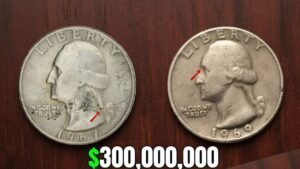
How can I tell if my Wisconsin quarter has the extra leaf?
Look closely at the corn stalk on the reverse. A second leaf sticking out from the left side indicates a valuable error. Magnification often makes spotting it easier.
Should I clean old quarters?
Never. Cleaning can permanently damage a coin’s surface, removing natural patina and reducing collector value dramatically.
Where can I sell a valuable quarter?
Local coin shops, online auctions like eBay, and coin shows are popular options. For highly valuable errors, professional grading services can authenticate your coin and increase its market value.
Are only state quarters from 1999–2008 worth collecting?
No. While state quarters are highly popular, errors exist in National Park quarters and other modern U.S. coins. Older coins like wheat pennies, silver dimes, and buffalo nickels also hold significant value.
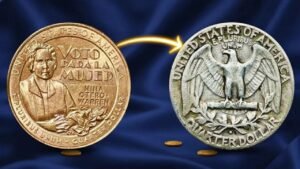
What does “double die” mean?
A double die occurs when a coin is stamped twice slightly offset, creating a ghosted or doubled image on letters or design elements. Look at inscriptions like “United States of America” or “Quarter Dollar” for this effect.
Can complete sets be valuable?
Yes. Complete state quarter sets, particularly those including silver proof versions, carry premiums, especially when preserved in original packaging.
Conclusion
State quarters have transformed from everyday pocket change into collectible treasures with both historical and financial value. From the Delaware Spitting Horse to the Wisconsin Extra Leaf, rare errors illustrate the unexpected magic hidden in U.S. coinage. With patience, attention to detail, and proper care, collectors and casual finders alike can uncover coins that not only tell a story but could also be worth a small fortune. In 2026, your loose change might just hold a piece of history—and significant collector value.