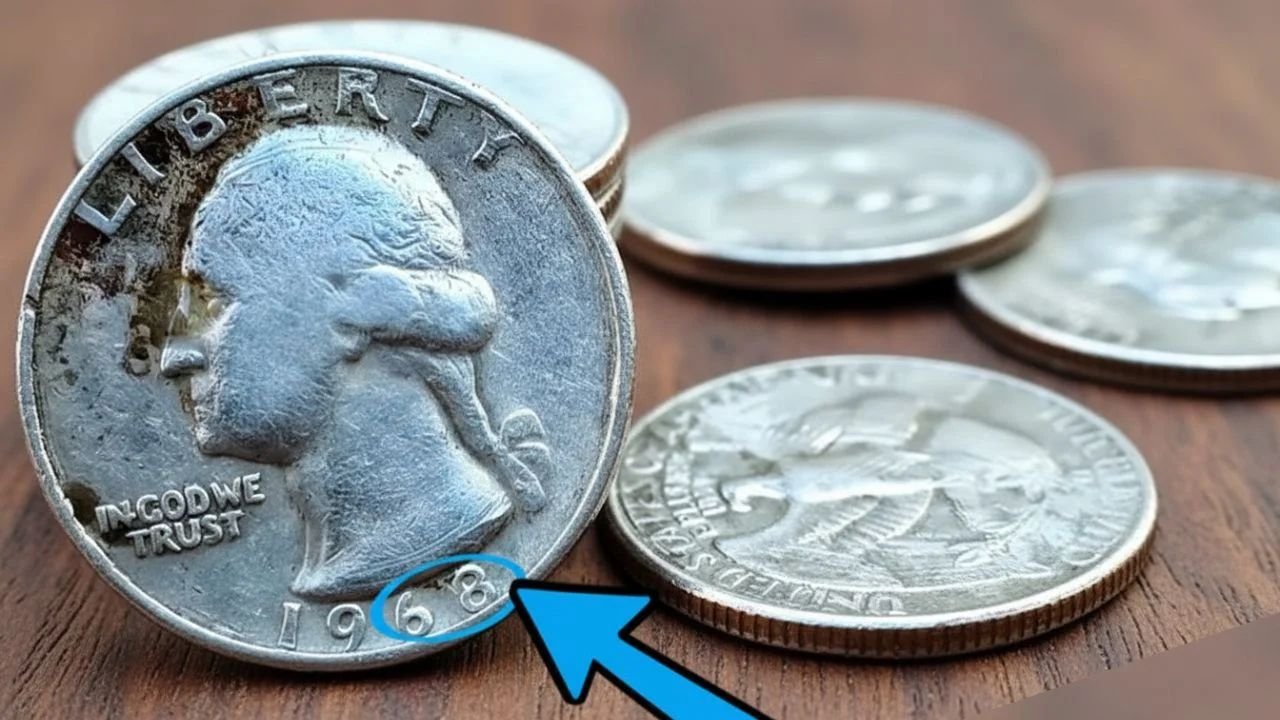
Quarters are everywhere—from pocket change to jars on dressers—but some of these coins hide astonishing value. While most are worth just 25 cents, a select few can fetch hundreds, thousands, or even hundreds of thousands of dollars. Coin collecting may seem niche, but discovering a rare quarter is like finding a hidden treasure, and you don’t need to be a professional numismatist to spot them. With a keen eye and some knowledge, you could be sitting on coins worth a fortune.
The Heavy Hitters: Quarters That Command Premiums
Certain quarters have achieved legendary status among collectors. The 1916 Standing Liberty Quarter, for example, had a limited mintage of just 52,000 coins. In pristine condition, this coin can be worth up to $335,000—essentially a house in your hand. Washington Quarters from 1932-D and 1932-S are similarly rare, minted during the Great Depression with low production numbers. Depending on condition, they can fetch $80,000 to $100,000. These coins are prized for both their scarcity and historical significance, making them some of the most sought-after quarters in existence.
Error Coins: When Mint Mistakes Make Money

Sometimes the U.S. Mint’s machines slip up, and those mistakes can create coins worth thousands. The 2004 Wisconsin quarter, for instance, features an “Extra Leaf” on the corn ear—a tiny anomaly that can sell for $10,000 or more. The 2005 Kansas quarter, famously nicknamed the “In God We Rust” error, occurs when grease filled part of the die, creating a striking typo. Such errors are fascinating to collectors because they tell a story about the minting process and are guaranteed to be one-of-a-kind.
How to Identify a Valuable Quarter
Spotting valuable quarters doesn’t require a magnifying glass or advanced training. Start by examining your change carefully for:
- Doubling in letters or numbers
- Extra design elements
- Off-center strikes
- Missing or unusual details
Pay attention to the year and mint mark—the small letter next to the date. “D” indicates Denver, “S” San Francisco, and no letter is Philadelphia. Coins from certain years or mints are inherently rarer and more valuable. Think of yourself as a detective: every anomaly could signal hidden worth.
Estimated Values for 13 Rare Quarters (2026)
| Quarter Type | Year | What Makes It Special | Possible Value |
|---|---|---|---|
| Standing Liberty | 1916 | Very low mintage (52,000) | Up to $335,000 |
| Washington (Denver) | 1932-D | Limited production, hard to find in good condition | Up to $100,000 |
| Washington (San Francisco) | 1932-S | Even scarcer than 1932-D | Up to $80,000 |
| Wisconsin State | 2004 | Extra Leaf error on corn | $1,000 – $10,000+ |
| Bicentennial | 1976 | Minting errors, silver versions | $100 – $20,000 |
| Kansas State | 2005 | “In God We Rust” die error | $100 – $1,000 |
| Delaware State | 1999 | “Spitting Horse” die crack | $100 – $1,000+ |
| Any off-center strike | Various | Misaligned design | $100 – $5,000+ |
| Wrong planchet | Various | Struck on incorrect metal blank | $1,000 – $10,000+ |
Frequently Asked Questions
Q: How can I tell if my quarter is valuable without being an expert?
A: Look for anything unusual—odd lettering, extra details, off-center strikes, or unusual design elements. Compare your coin to verified images online or consult coin forums. When in doubt, a professional dealer can help verify authenticity.
Q: Should I clean old quarters to make them look better?
A: Never. Cleaning damages the coin’s surface and significantly lowers value. Collectors prize original condition, even if the coin appears dirty.
Q: Are all old quarters valuable?
A: Not at all. Age alone doesn’t determine worth. Rarity, condition, and the presence of errors are what make a coin valuable. Millions of older quarters remain worth only face value if they are common and worn.
Q: What is the most valuable quarter I might find in change?
A: Modern error coins like the 2004 Wisconsin Extra Leaf quarter are among the most accessible high-value finds. Extremely rare 1932-D or 1932-S Washington Quarters are possible but highly unlikely to appear in circulation.
The Enduring Thrill of Collecting
The story of these 13 quarters illustrates that value is not always obvious. Imperfections, low mintage, and historical context combine to create coins worth far more than their face value. Whether you’re hunting through loose change, inherited collections, or estate finds, the potential for discovery keeps collectors engaged. Each coin is more than metal—it’s a piece of history, a testament to design, and, sometimes, a hidden fortune waiting to be uncovered.