For most people, a quarter is just another coin used for parking meters or coffee runs. For collectors, however, some quarters are far more than their face value—they are miniature works of art, snapshots of American history, and, in rare cases, highly valuable treasures. The Washington quarter, introduced in 1932 and a staple of U.S. coinage ever since, holds some of the most fascinating stories in numismatics. This guide explores the rare issues that can transform everyday currency into a collector’s goldmine.
The Presidential Quarter – A Brief History
The Washington quarter was introduced in 1932 to commemorate the 200th anniversary of George Washington’s birth. Sculptor John Flanagan’s dignified portrait of the first president graces the obverse, while the reverse features an iconic heraldic eagle. Produced in vast quantities, the series’ true allure lies in its exceptions: low-mintage issues, mint errors, and transitional pieces. These coins offer collectors a connection to economic shifts, technological advancements, and historical moments influencing the U.S. Mint.
Key Rare Washington Quarters
The table below highlights some of the most collectible Washington quarters. Values are approximate and vary with condition, certification, and market demand.
| Year | Mint Mark | Key Feature & Context | Reason for Rarity & Collectibility |
|---|---|---|---|
| 1932 | D | Low Mintage, Depression-Era Issue | Only 436,800 struck; scarcity from the Great Depression makes it highly prized. |
| 1932 | S | Limited San Francisco Production | Lowest mintage of the series at 408,000; cornerstone coin for collectors. |
| 1943 | D | Doubled Die Obverse | Misaligned die caused visible doubling of date and inscriptions; a classic mint error. |
| 1950 | D | D Over S Mintmark | Denver reused a San Francisco die; faint ‘S’ beneath the ‘D’ is a fascinating anomaly. |
| 1955 | D | Doubled Die Obverse | Prominent doubling, especially on “IN GOD WE TRUST”; a popular error variety. |
| 1964 | * | Transitional Planchet Error | A few coins struck on copper-nickel clad planchets instead of 90% silver; extremely rare. |
| 1970 | S | Proof-Only Issue | Not released for circulation; any circulated example is a major find. |
| 1982 | * | No Mintmark Error | Philadelphia coins normally carry a “P”; missing mintmarks are collectible varieties. |
| 1983 | * | Doubled Die Obverse | Clear doubling on Washington’s hair and lettering; a modern collectible. |
What Makes a Washington Quarter Valuable?
Several factors determine the value of a quarter:
Scarcity: Low mintage numbers, like the 1932 issues, immediately create rarity.
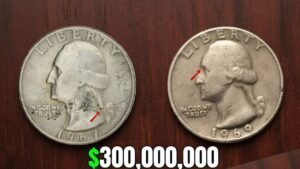
Condition (Grade): Coins in mint-state condition with original luster are worth exponentially more than worn examples. Professional grading on a 1–70 scale ensures accurate assessment.
Errors and Varieties: Minting mistakes such as doubled dies, repunched mintmarks, and off-center strikes create unique, collectible coins.
Metallic Composition: Quarters minted in 1964 and earlier are 90% silver, giving intrinsic bullion value in addition to collectible worth.
Demand: Collector interest drives market prices. Coins with compelling stories or visually striking errors command premium values.
Tips for New Collectors
Starting a collection can be simple, rewarding, and educational.
- Start with What You Have: Search piggy banks, old coin jars, or family collections for potential rarities.
- Use Simple Tools: A magnifying glass, loupe, and good lighting help inspect coins. A digital scale can confirm silver content.
- Handle Coins Properly: Always hold coins by their edges to avoid oils and scratches. Store in inert plastic holders or archival-quality albums.
- Educate Yourself: Reference numismatic books, reliable websites, and forums to build knowledge.
- Patience is Key: Rare finds are uncommon. Enjoy the process of discovery and learning.
Frequently Asked Questions
Q: What is the most valuable Washington quarter?
A: The 1932-D and 1932-S in top mint-state condition are among the most valuable regular-issue coins. Major errors like the 1943 or 1955 Doubled Die can also fetch high prices.
Q: How can I tell if my pre-1965 quarter is silver?
A: Check the date (1964 or earlier) and the coin’s edge. Silver quarters have a solid silver edge; clad quarters post-1964 show a copper core sandwiched between layers of nickel.
Q: What does “Doubled Die” mean?
A: It occurs when a coin die receives two misaligned impressions from the hub. This creates a clear doubling of design elements and is highly collectible. Machine doubling is flatter and less valuable.
Q: Are coins without a mintmark always from Philadelphia?
A: Traditionally, yes. Philadelphia did not use a mintmark until 1980. However, missing mintmarks on coins that should have one (like a 1982-P) create collectible error varieties.
Q: Should I clean old coins?
A: Never clean coins you believe may be valuable. Even gentle cleaning can damage the surface and reduce value. Natural patina preserves authenticity and appeal.
Conclusion – More Than Just Change
The Washington quarter is a staple of American life, yet its rare variations provide a window into history, minting technology, and numismatic intrigue. From the Depression-era 1932 issues to modern errors, these quarters offer both collectors and enthusiasts a lifelong study. Whether drawn to history, artistry, or the thrill of discovery, examining the coins in your pocket could lead to both educational enjoyment and potentially significant financial reward. Collecting Washington quarters is not just about money—it’s about connecting with history, understanding craftsmanship, and appreciating the stories carried in everyday currency.