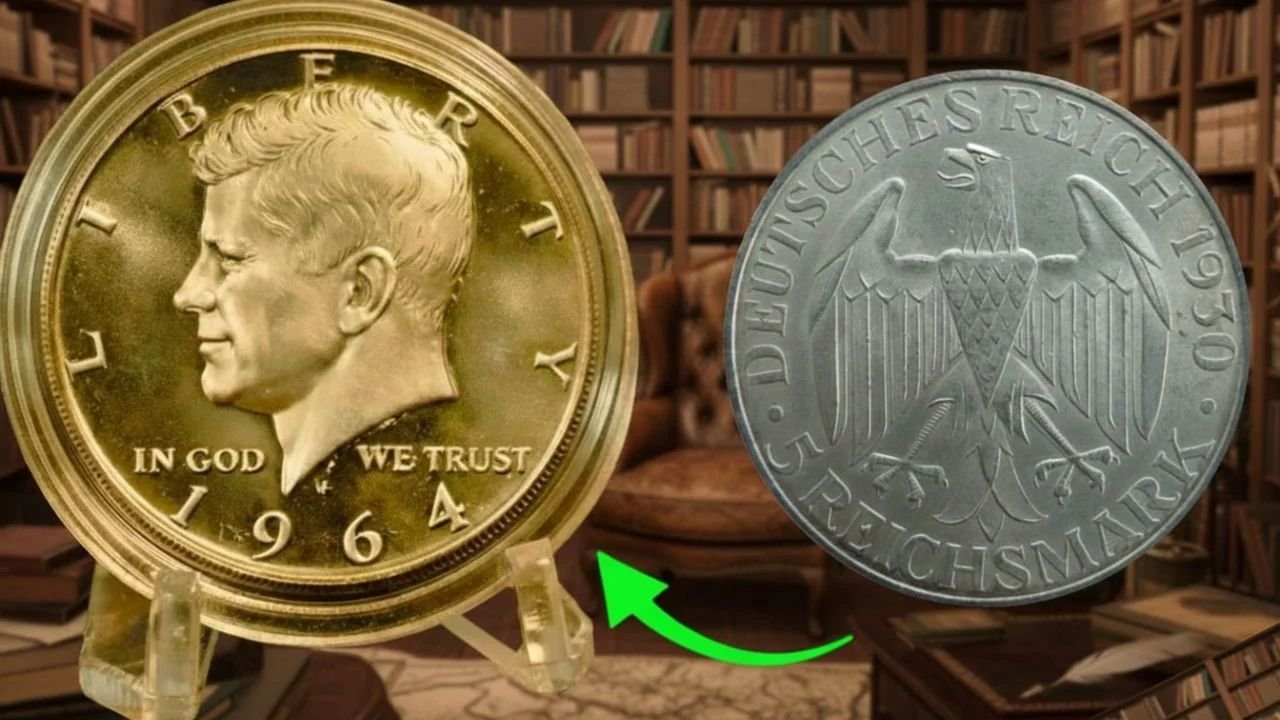
The Kennedy Half Dollar holds a special place in American history and numismatics. Introduced in 1964 as a tribute to the late President John F. Kennedy, this coin quickly became more than just currency. Struck in 90% silver, the original 1964 issues were hoarded by the public, transforming ordinary coins into cherished keepsakes. While most Kennedy Half Dollars today remain common and worth only their face value, certain rare varieties and minting errors have skyrocketed in value, with one exceptional coin reportedly selling for $5.9 million in 2026.
The Origins of the Kennedy Half Dollar
The creation of the Kennedy Half Dollar was a rapid, nation-wide response to a tragic event. Following Kennedy’s assassination in November 1963, the U.S. Treasury expedited production to honor the fallen president. The coin’s obverse features a finely detailed portrait of Kennedy, while the reverse displays the presidential seal. Early silver issues were treasured by the public, who often stored them rather than spent them, preserving coins that would later become valuable collectibles.
Key Kennedy Half Dollar Varieties
Collectors identify rare Kennedy Half Dollars by year, mint mark, and unique features. These variations significantly impact a coin’s value. The following table outlines some of the most sought-after varieties and their estimated value ranges as of 2026:
| Variety / Feature | Key Characteristics | Estimated Value (2026) |
|---|---|---|
| 1964 Silver (90%) | No copper layer; high silver content | $8 – $20 (circulated) |
| 1965–1970 Silver (40%) | Thin silver layer visible on edge | $4 – $10 (circulated) |
| 1970-D Half Dollar | Low mintage circulation strike | $15 – $50+ |
| Proof Coins (S Mint) | Mirror-like fields, Deep Cameo contrast | $5 – $50+ |
| Doubled Die Obverse | Doubling in “LIBERTY,” “IN GOD WE TRUST,” or date | $100 – $5,000+ |
| Off-Center Strike | Misaligned design; dramatic shifts are prized | $50 – $1,000+ |
| Wrong Planchet Error | Struck on dime, quarter, or foreign planchet | $1,000 – $50,000+ |
| Legendary Rarities | Unique, flawless specimens with exceptional errors | Up to $5.9 Million |
Minting Errors That Drive Value
The most valuable Kennedy Half Dollars are often defined by minting anomalies. Key types include:
- Doubled Dies: Occurs when the die impresses the design twice, creating doubled letters or dates. These coins are highly collectible, especially when the doubling is pronounced.
- Off-Center Strikes: Coins struck off-center display a portion of the design missing. The more dramatic the misalignment, the higher the value.
- Wrong Planchets: Extremely rare, these errors involve a half-dollar design stamped on a non-standard blank, such as a dime-sized planchet or foreign metal.
- Proof Coins and San Francisco Mint Issues: Proofs with mirror-like fields and “Deep Cameo” contrast are more valuable than standard business strikes, especially in pristine condition.
The $5.9 Million Kennedy Half Dollar
The revelation of a Kennedy Half Dollar selling for $5.9 million stunned the numismatic world. This coin was an extraordinary specimen: a flawless example of a rare minting error or unique variety. Its value demonstrates that even relatively modern coins can achieve legendary status when rarity, condition, and historical significance converge. The sale emphasizes the potential hidden in ordinary collections, proving that every half-dollar deserves a careful eye.
How Value Evolves Over Time
The value of Kennedy Half Dollars has shifted over decades. Early hoarding kept common dates abundant and inexpensive. As silver prices rose in the late 20th century, silver-content coins gained intrinsic melt value. Later, the introduction of professional grading services standardized assessments of condition, unlocking higher prices for uncirculated and error specimens. In the digital era, online auctions and marketplaces have further expanded access, allowing rare Kennedy Half Dollars to achieve record-breaking prices worldwide.
Tips for Collectors
For those exploring the world of Kennedy Half Dollars:
- Check Dates and Mint Marks: 1964 coins are 90% silver; 1965–1970 coins have 40% silver content. Mint marks identify the origin: D for Denver, S for San Francisco, or none for Philadelphia.
- Look for Errors: Examine the coin for doubled letters, off-center strikes, or unusual planchets.
- Preserve Condition: Avoid cleaning; store coins in protective holders to maintain value.
- Professional Grading: Submit rare coins to PCGS or NGC to authenticate, grade, and encapsulate them.
- Stay Informed: Follow numismatic forums, auctions, and collector communities to learn about emerging trends and rare finds.
The Joy of Discovery
Part of the allure of Kennedy Half Dollars lies in the thrill of discovery. Collectors have found valuable doubled-die or error coins in family collections, bank rolls, and even drawers. Each coin carries not only potential monetary value but also a story—a connection to a defining moment in history. Whether a coin is worth fifty cents or millions, the excitement comes from recognizing the rare and extraordinary in the ordinary.
The Kennedy Half Dollar is more than just a coin; it is a piece of American history, an object of beauty, and, for some, a path to remarkable value. With careful observation and a bit of luck, collectors in 2026 can still uncover treasures hidden in plain sight, turning everyday change into extraordinary discoveries.