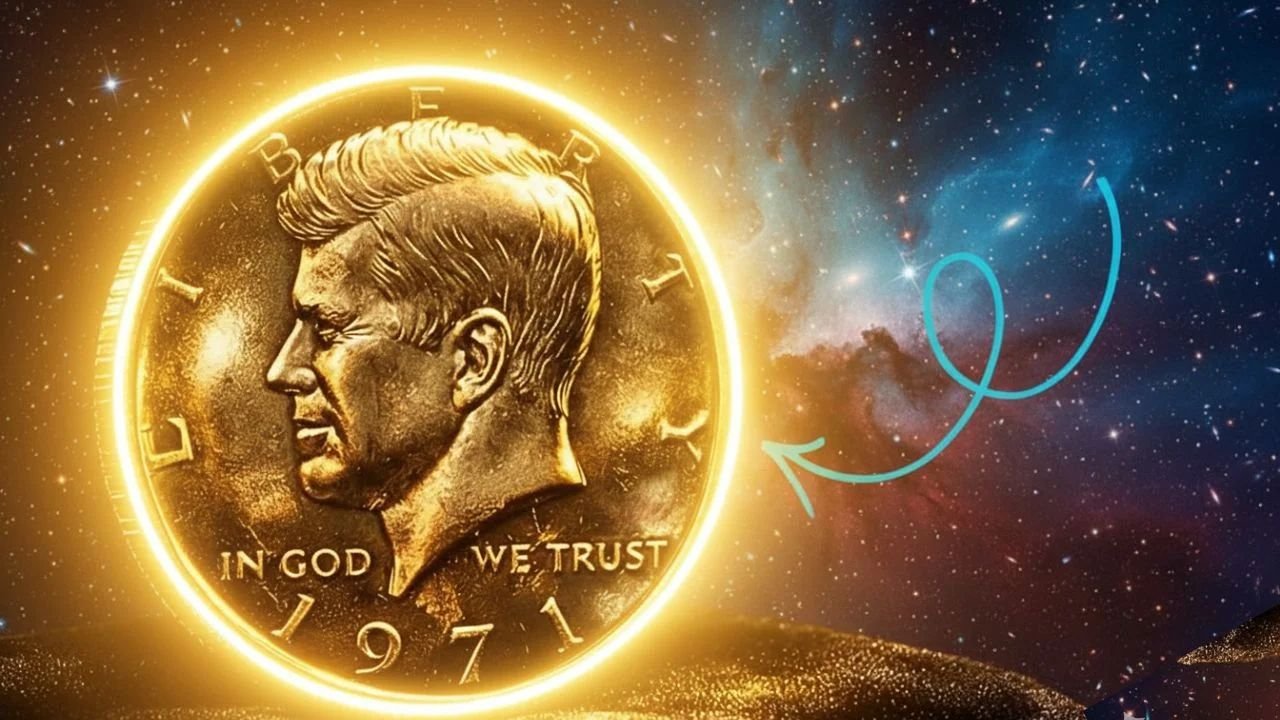
The 1971 Kennedy Half Dollar remains one of the most iconic and collectible coins in U.S. numismatics. Introduced just seven years after President John F. Kennedy’s assassination, the Kennedy Half Dollar was originally a tribute to his legacy, combining artistry with historical significance. The 1971 edition stands out not just for its commemorative nature but also for marking a pivotal change in the coin’s composition and role in everyday circulation. For collectors, historians, and enthusiasts, this coin represents a tangible connection to a transformative era in American monetary history.
Historical Context and Significance
The Kennedy Half Dollar debuted in 1964, immediately following Kennedy’s death, and initially featured a 90% silver composition. Between 1965 and 1970, the coin’s silver content was reduced to 40% due to rising precious metal prices. By 1971, continuing increases in silver prices made it economically unfeasible to produce circulating half dollars with any silver content. Consequently, the 1971 issue was the first to feature a copper-nickel clad composition, identical in makeup to contemporary dimes and quarters. This transition reflects broader economic trends of the era, including the move away from precious metals in everyday currency.
1971 Kennedy Half Dollar Specifications
| Feature | Details |
|---|---|
| Year of Issue | 1971 |
| Face Value | $0.50 (USD) |
| Composition | Copper-nickel clad: outer layers 75% copper, 25% nickel; core 100% copper |
| Weight | 11.34 grams |
| Diameter | 30.6 mm |
| Edge | Reeded |
| Mints & Mint Marks | Philadelphia (no mint mark), Denver (D), San Francisco (S – Proof only) |
| Obverse Designer | Gilroy Roberts |
| Reverse Designer | Frank Gasparro |
| Key Significance | First circulating half dollar with no silver content |
Artistic Design and Symbolism
The enduring appeal of the Kennedy Half Dollar lies in its artistry. The obverse, crafted by Chief Engraver Gilroy Roberts, features a dignified left-facing portrait of President Kennedy, capturing both his youth and charisma. Frank Gasparro’s reverse design presents the Presidential Seal: an eagle clutching an olive branch in one talon and a bundle of arrows in the other, surrounded by 50 stars symbolizing the states. The 1971 copper-nickel clad strike imparts a different luster and heft compared to its silver predecessors, offering collectors a subtle yet notable distinction.
Collector Value and Market Insights
For the average collector, most 1971 Kennedy Half Dollars hold a value close to face, typically ranging from $0.50 to a few dollars. The true numismatic value emerges in coins that are uncirculated or proof-quality. Coins exhibiting full mint luster, sharp strike details, or those preserved in original packaging can command significant premiums. Certified high-grade examples or coins with rare mint errors are particularly desirable, providing both an entry point for new collectors and a challenge for seasoned numismatists.
Notable Varieties and Errors
Although 1971 was not a year notorious for errors, careful observation can reveal valuable anomalies. Doubled die varieties, where elements of the design appear duplicated due to die misalignment, are sought after by collectors. Striking errors—such as off-center coins or pieces minted on incorrect planchets—can dramatically increase a coin’s value. Proof coins, particularly those from the San Francisco Mint bearing the “S” mark, may feature “Deep Cameo” or “Ultra Cameo” designations, highlighting frosted elements against mirror-like fields and commanding substantial premiums.
Why the 1971 Half Dollar Is a Collector Staple
The Kennedy Half Dollar series remains popular due to its historical context, distinctive design, and attainable goal of collecting by date and mint mark. The 1971 edition is essential for anyone aiming to complete a clad series, bridging the gap between the silver issues of the 1960s and the fully clad coins of the modern era. Its story embodies a unique intersection of history, economics, and artistry, making it a centerpiece for any collection. The potential of discovering a rare error in everyday circulation continues to draw hobbyists and enthusiasts alike, ensuring the coin’s lasting appeal.
Frequently Asked Questions
Q: Is the 1971 Kennedy Half Dollar made of silver?
A: No. Circulating coins from 1971 are copper-nickel clad. Only San Francisco proof coins in special sets contained 40% silver.
Q: Where is the mint mark located?
A: The mint mark, if present, is on the obverse below Kennedy’s neck and above the date. Philadelphia coins have no mint mark, Denver coins bear a “D,” and San Francisco proofs an “S.”
Q: What is the most valuable 1971 Kennedy Half Dollar?
A: High-grade certified examples, coins with major mint errors, and 1971-S Silver Proofs in perfect “Deep Cameo” condition hold the highest value.
Q: How can I identify a proof coin?
A: Proofs feature a mirror-like background and frosted design elements, often sold in special sets by the U.S. Mint and marked with an “S.”
Q: Should I clean my coins to improve value?
A: No. Cleaning can permanently damage a coin, significantly reducing collector value. Handle coins by the edges and store them in proper holders.
The Legacy of the 1971 Kennedy Half Dollar
The 1971 Kennedy Half Dollar represents more than its face value. It is a piece of history, a testament to changing economic realities, and a cherished collector’s item. Its blend of artistry, historical significance, and attainable collectibility makes it a lasting favorite in American numismatics. Beyond metal or market price, the coin embodies stories, memories, and a connection to the era it represents, proving that even everyday objects can carry extraordinary meaning.